
Audio

Creating Wonder

Wonder Code

Throughout my career as a software developer, I remember distinct moments of wonder.

Times when I quite literally asked: “how did they do that?

My first professional engagements were performed on the original IBM PC, running under MS-DOS. As I was learning my craft, I noticed that almost all professional apps displayed their screens instantaneously; while my screens painted painfully slowly, character by character. What was I doing wrong? And more importantly:

How did they do that?

Turns out, in order to display screen content blindingly fast, one had to use undocumented, unofficial areas of the PC’s memory space; by writing directly into the PC’s display memory, screens popped, rather than crawled.

The next time that I had a similar sense of wonder, I was working on web applications. In 2005, I witnessed the Google “Suggest” feature for the very first time (you probably know it best as the drop down box, with suggested search terms as your type, on Google’s home page).

Until that time, web apps required a round trip to the server to get new data. Google was seemingly demonstrating real-time data retrieval, without leaving the current web page.

How did they do that?

Google was using an API call named XMLHttpRequest, that allowed an easy way to retrieve data, without a return trip to the server. You now know this as part of the AJAX programming model (Asynchronous JAvascript + XML) – which changed the way web applications have been written ever since.

Smartphones, tablets, and wearables – producing entirely new markets, where none existed before – have also created a self-same sense of wonder.

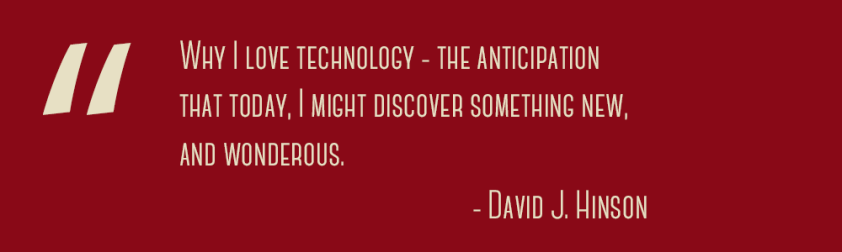
And it’s why I love technology – for the anticipation that today, I might discover something new, and wonderous.

What will you do today, to create a sense of wonder?

Go, and be you.

New “300 Words, 2 Minutes” Zazzle Store

Have a swag itch, that needs scratching?

Then visit our new 300 Words, 2 Minutes Zazzle Store!

Stickers, buttons, mugs, trivets… anything you need to show your love for 3W2M!

3W2M 4-Up Square Button
3W2M 4-Up Square Button by 300Words2Minutes
Look at other 300 Buttons at zazzle.com
Audio

Quo Vadis?

Signpost Header

Quo Vadis?

It’s an ecclesiastical Latin phrase meaning Where are you going?

That is the $64,000 question for everything we say and do, isn’t it?

I think about this question – all the time – in conducting my professional and personal affairs. Before engaging in a project, starting a conversation, or resolving a conflict, I stop and ask myself two basic questions:

  • What is the desired outcome I wish to achieve? and,
  • What am I willing to do to achieve this desired outcome?

Seems simple enough.

But the simplicity of these two questions belies their fundamental analytical nature. Because, if you can’t articulate an answer for either of these two questions, then you should immediately stop whatever you’re doing, and reconsider your course of action.

I see total a lack of this type of analysis happening, over and over and over again.

Projects are started, with a massive budget, but no strategy or even anything approaching a “look of success.” Engagements are commenced with no articulation of benchmarks, milestones, or firm deliverables.

Relationships are started, with no set boundaries, and no endgame in sight.

There’s a scene from Alice in Wonderland that demonstrates this folly quite well:

One day Alice came to a fork in the road and saw a Cheshire cat in a tree. Which road do I take? she asked. Where do you want to go? was his response. I don’t know, Alice answered. Then, said the cat, it doesn’t matter.

The Cheshire Cat is right. If you don’t know where you’re going, then it really doesn’t matter what road you take.

There are few things in life more disappointing, than realizing that all your time and energy have been wasted on the wrong objective; that you’ve been following the wrong path. Or, that you simply didn’t have the stomach to do what it takes to reach your goal.

Decide, first, where you’re going, and what it will take to get you there. Make the journey matter.

Quo Vadis?

Go, and be you.

Audio

Writer’s Block

Writer's Block

It happens to all of us.

You’ve been tasked with writing an article. Or a speech. Or a blog post.

You sit, staring at a blank screen, because you can’t seem to put two cogent thoughts together.

Congratulations. You have writer’s block.

When this happens to me, I take a walk. Or go for a drive. Maybe watch a movie.

And many times, simply talking through my predicament with a colleague or friend is enough to kick start my creative processes.

But sometimes – sometimes – nothing comes to mind at all.

That’s because writer’s block is symptomatic; it means it’s time to stop. Take a knee. Re-fill the tank. Recharge.

It is said that in music the pauses are just as important as the notes in the score.

The same is true in our personal, professional, and creative lives. Pausing for reflection, and renewal, is as natural – and vital – as going going to sleep every night.

Our bodies and minds need downtime. Without it, we are metaphorically eating our seed corn. By neglecting regular, restorative breaks in our routine, we are inviting creative starvation.

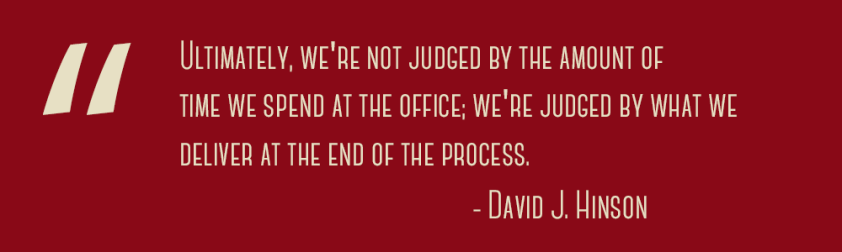
We should schedule our downtime with as much intentionality as we treat our work schedule, because it is just as important. And ultimately, we’re not judged by the amount of time we spend at the office anyway; we’re judged solely by what we deliver at the end of the process.

What do you do, when you hit the creative wall?

Me? I write about writer’s block.

Go, and be you.

Audio

Professional Development

Professional Development

When you think of professional development, what is it that you imagine?

Do you think of conferences, held in warm, sunny climes… or webinars, watched over a bagged lunch… or droning, mandatory training sessions, conducted by your HR department?

Although all of these are nominal examples of professional development, they really only scratch the surface of what real professional development is all about.

Professional Development is challenging your team to punch above their weight; to tackle work that stretches their current abilities;

Professional Development is holding your team accountable, holding yourself accountable, and leading by example;

Professional Development is fighting for fair compensation for your people, and rewarding good work as you’re able;

Professional Development is firing underperformers and removing toxic influences; and, it’s putting people in situations where there is a pathway to success, and they are given the proper tools to do their work.

Professional Development is mentoring those under your charge, holding them up when they excel, and being honest when they need to do better.

Professional Development is being present, in the moment, and engaged in the work; Being a mentor, a coach, and an honest broker.

Professional Development happens every day, whether you acknowledge it or not. It is not a perk, but a solemn responsibility, to offer a pathway to success for everyone that reports to you; to move up, and perhaps out, of your organization, to bigger and better personal goals.

Professional Development is your job, and the exemplar you present doing your job.

Send your folks to training. Sponsor release time for 20% projects. Set aside budget for conference travel.

But realize – real professional development happens the minute you hit the door, grab your coffee, and start the day.

Go, and be you.

Audio

Stretching

3W2M Logo

Back in the summer of 2008, I was asked by a large national retailer to create a couple of Flash-based Facebook applications, for their Back-to-School Campaign.

They were throwing a boatload of money at me, to furnish a ton of working code, in an unreasonable – and inflexible – amount of time.

At the time, I had many Facebook applications already under my belt, and had a good reputation in the space – which was why they chose me to begin with.

But I had never written a single line of Flash. Like, at all.

So, naturally, I accepted.

Now, not for the first time – or even close to the last time – I accepted a project without knowing precisely how every component worked beforehand; or, even how I was going to get it all done on time.

But it was by no means an uncalculated risk for me to agree to deliver a professional grade product, using an unfamiliar toolset, under an aggressive deadline. Through experience, I knew how to acquire new language skills and attain mastery, through a process I knew worked for me.

That process consisted of me digging in and working my tail off.

The first step, however, was me, stretching, and taking on something beyond what I had currently mastered; accepting manageable risk, and trusting in my ability to grow into what the project needed.

Ultimately, I delivered both applications, on time and on budget. The customer was happy. And I had a nice payday for my efforts.

Admittedly, not everyone is built to work this way. Nor should they even try to.

And yet – fortune favors the bold. And the bold stretch beyond what is comfortable, reasonable, and safe.

Go, and be you.

Audio

Prioritize and Compartmentalize

3W2M Logo

The longer we live, the more stuff – literally and figuratively – we drag along with us.

Career, family, regrets, achievements, friends, dreams, conflicts, promises, goals – all of these take up the valuable – and limited – real estate inside our heads.

It’s a continual fight to maintain some semblance of balance, and proportion, to these competing priorities. And, it’s a never-ending struggle to keep what we truly value at the very top of the list.

If one isn’t careful, it’s easy to be totally overwhelmed by the overabundance of choice. Paralysis by Analysis is a very real consequence of too many competing priorities, and too little time or resources or – simply too little you – to address.

We are not machines. We can’t simply turn off our needs, wants, and emotions at the flip of a switch.

But we always have choice over our own actions, over our power to decide.

The beginning of exercising real control over what is important in our lives begins with where we spend our time, talents, and treasure. We may say we value one thing over another; but we show what we truly value, by our actions; by what we do.

When I am overwhelmed, I sit in a quiet place. I think about where I want to be, and the steps that need to happen, in order, to get me to that place.

I decide on what needs to happen, first, and I make a decision. Then I consider the next action that follows as a consequence of that decision, and decide what needs to occur after that.

Soon, I’ve constructed an entire decision matrix – sometimes on paper, or sometimes, just in my head – that determines what needs to be worried over – and what doesn’t.

Anything that can’t be solved today, isn’t given the headspace to take away from today, what needs to be done today.

Another way this might be better said: Don’t borrow trouble from Tomorrow.

Go, and be you.

Audio

Being a Social CIO

Social CIO

We now live in a world of ubiquitous connectivity, with “always on” access to information, right in our shirt pockets.

How, then, do we incorporate this “new normal”, into the residential liberal arts college experience?

A significant part of what I do as a CIO, is to focus a lens on what technology means for today’s students, and to insert that perspective into the priorities of the College.

There is a perception that technology is antithetical to a liberal arts education. And that’s simply not true. There are studies that show that a blended use of technology, coupled with traditional methods of teaching, produces outcomes superior to using either approach alone. But I don’t see it as my job to force technology upon faculty. Pedagogy drives our technology planning, and not the other way around.

The definition of what constitutes work and learning spaces now means being able to work, learn, and study anywhere we have an Internet connection. Students are constantly connected -and they voraciously consume content anywhere they are. Our greatest opportunity ­- and challenge -­ is to keep our networking infrastructure ahead of the demand curve, and recognize that this is now no longer an amenity, but a baseline necessity for our students and a competitive advantage, if we can successfully communicate our capabilities to our prospects.

As an entrepreneur, I was always dialed into the importance of promoting my personal brand, as a key part of my business’s overall marketing strategy.

When I transitioned to being a CIO, I eased off my social media activity, until I got a handle on my new position. It’s one thing to promote your personal brand when you’re the CEO; it’s quite another to do so as a senior member of the administration of a leading liberal arts college.

But once I understood how I could retain my authenticity, and still help craft interesting conversations about the College within my established social networks, I relaxed and just let the stories about the cool projects we were working on develop organically.

The key is to be true to yourself, respect the brand and institutions you represent, and be accountable for your conversations in the marketplace of ideas.

That – and a ton of self­ editing.

Go, and be you.

Audio

Transactions, and Relationships

3W2M Logo

I think a lot about why I do, what I do.

It’s not terribly complicated – I mean, it is me, after all.

But, when it comes down to it, I think about my work as two very distinct sets of activities: the relational, and the transactional.

Transactional activities are very easy to identify. They’re governed by a hedonistic, quid pro quo calculus of getting maximum benefit, from direct – and immediate – action. I do a job, and get paid for my efforts; I do this – I get that.

Relational activities are much less well-defined, but are orders of magnitude more important to one’s reputation – and opportunity for long-term success. Relational activities are conducted with the knowledge that there is no guaranteed, immediate benefit to be gained by any particular action, or behavior. Think Baker’s Dozen. Or even, these podcasts.

Now consider this: is it better to think about business as strictly transactional, or relational?

The answer is, well, it depends.

If you only want immediate gratification, transactional thinking is definitely the way to go. Amazon and Ebay are built entirely on this model, as is anyone competing solely on price, or convenience.

But – if you want longer term benefit, and something approaching loyalty, you have to put in time, and effort, to construct lasting relationships; building connection through prolonged, intentional contact. Executing. Doing what you say you will do. Reliably, and repeatedly.

It’s a road much less traveled… but oh so highly prized, when you actually run across a relational company in the wild. Nordstroms is one such brand that immediately comes to my mind, as a company that totally “gets” that is more valuable to perhaps lose a little money through a generous returns policy, than it is to lose a customer over a single transaction.

It’s the relationship that is valuable, not the sale.

So: as you go about your day, be mindful; value your actions not solely by the immediate gain you may achieve, now, but by the potential of what might be achieved through a longer, relational view.

Go, and be you.

Audio

Comfort Zones

What does it really mean to “step outside one’s comfort zone?

Does it simply mean that you are able to slip into new situations, with little, to no, effort? Or, does it mean that you have an unusually high tolerance for personal, emotional, or professional risk?

How often do we actually place ourselves into uncharted territory – places we’ve never been, among people who aren’t like us; with absolutely no safety net to catch us, when we fall?

It’s definitely not for the timid or meek.

Change is how we grow, and is to be found amidst the strange and the unfamiliar.

Testing new boundaries. Learning new skills. Accepting new challenges. Meeting new people. All part of maturing as people, and as professionals.

Once our lives and careers reach a certain point, many of us learn to settle. Our attachments, responsibilities, and our fear of losing everything we have attained, keeps us frozen in time, and space.

Our comfort zones are merely baffles that keep us from being buffeted by the winds of change; but they don’t really stop change from happening around us. Change just flows around our comfort zones – until circumstance or happenstance removes our flimsy protection, and we are forced – perhaps, for the first time – with facing the new, without the comfort of the old.

Being comfortable in the unfamiliar doesn’t come easy for anyone. Those who appear effortless in their ability to face the new become so, only through studied practice, and experience. Like anything in life, one has to work at it, to become competently proficient. To be a Pro.

The old saying goes, “need never made a good bargain.” The best time to learn to stretch your comfort zones, is when you can, and not when you need to.

So: go and learn a new language. Take a trip. Join a new group. Do something that is totally outside your realm of experience. While you can. Not when you need to.

Step outside your comfort zone.

Go, and be you.